Are unlimited design services really “unlimited”?

TABLE OF CONTENTS
TL;DR
- ✅ "Unlimited" means unlimited requests and revisions, not unlimited finished designs
- ✅ Expect 10–20 finished designs per month on a standard single-designer plan
- ✅ At $500–$2,600/month, the per-asset cost often beats freelance rates when your design volume is steady
- ❌ Requests are handled sequentially — there is no parallel processing across multiple projects at once
- ❌ Not suited for one-off projects, complex 3D work, or teams that need marketing strategy alongside design execution
Most people who've heard of unlimited design services have one of two reactions. Either it sounds too good to be true, or they assume it means exactly what it says: unlimited. Neither is quite right.
The model is genuinely useful. Millions of businesses use it to keep their creative pipeline running without the overhead of hiring, the unpredictability of freelancers, or the cost of agency retainers. But the word "unlimited" is doing some marketing work that's worth unpacking before you sign up.
Here's exactly what's included, what's not, what realistic monthly output looks like, and how to decide if a subscription model makes sense for your business.
What does "unlimited" actually mean in design subscriptions?
In unlimited design services, "unlimited" refers to the number of requests and revisions you can submit, not the number of finished designs you'll receive. You pay a flat monthly fee, queue as many projects as you want, and designers work through them sequentially, delivering a set daily output. Every revision is included at no extra cost.
The distinction matters more than it sounds. Designers are people doing real work, not an algorithm generating images on demand. No matter how many requests are in your queue, a designer can only produce a finite amount each day. Most services define this as a "daily output": the realistic amount of work one designer can deliver in a business day, moving from project to project as each reaches a review or approval state.
How many designs can you actually get per month?
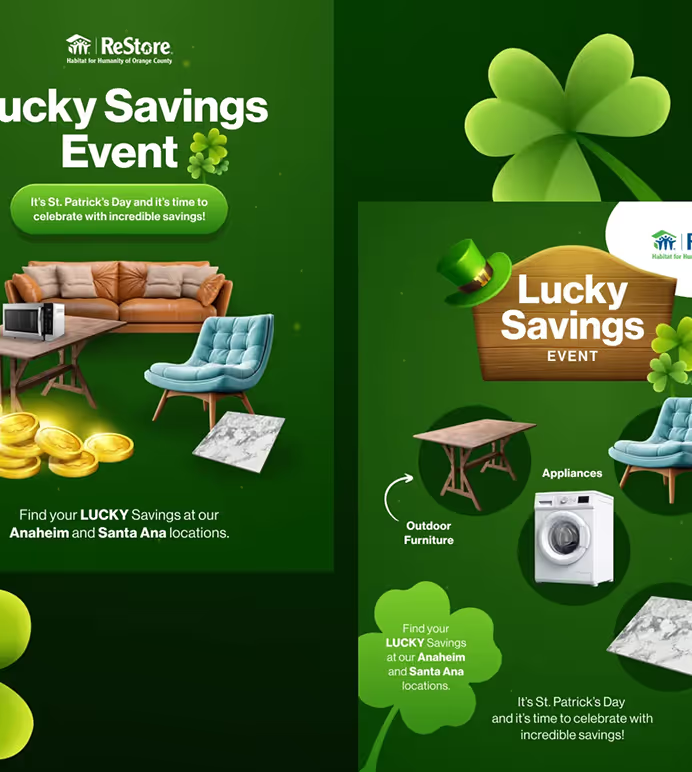
On a standard single-designer plan, expect roughly 10–20 finished designs per month, depending on project complexity and how many revision rounds each one takes. Simple requests (social media graphics, display ads, flyers) can move through in a day. Complex projects like brand identities, multi-page decks, or landing pages take several days each and reduce your monthly total accordingly.
At ManyPixels, here's what a typical daily output looks like:
- 2–3 social media graphics
- 1–2 custom illustrations
- 2–3 display ads
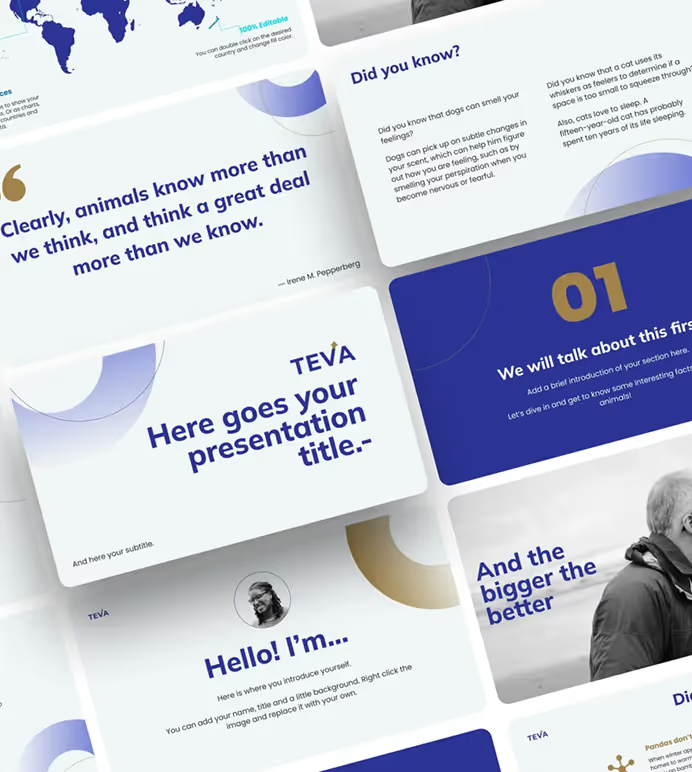
- 4–5 pages of a brochure, e-book, or slide deck
- 1 GIF draft (2–3 seconds)
- 1–2 flyers
- 1 logo draft
- The first draft of a landing page
The number most people underestimate is the impact of revision cycles. Each round of feedback typically adds a business day. Average two rounds per project and your effective monthly output lands closer to 8–12 completed assets on a busy mix of projects. That's still solid value, but it's worth calibrating expectations before you start queuing 40 requests.
If you need faster throughput, higher-tier plans offer two daily outputs or a dedicated Designated Designer with real-time Slack collaboration. Learn more about how unlimited graphic design works in practice.
What's included in an unlimited design service
Unlimited requests
You can submit as many design briefs as you want. They all enter a queue, and your designer works from top to bottom, delivering one daily output per designer slot. There's no limit on the number of active briefs, and you can reprioritize your queue at any time.
For marketing teams, this is the part that changes how you work. You stop rationing design requests based on cost or freelancer availability. If you need a last-minute graphic for a campaign launch, add it to the top of your queue and it gets handled the next business day.
Unlimited revisions
I absolutely love ManyPixels for the incredible speed they bring to the table in delivering high-quality designs. The fast turnaround on revisions means I never have to wait long to get exactly what I need. - Andrei Tiburca Content Marketing Manager, Hashnode
Every revision is included — color changes, copy updates, layout adjustments. No extra charges, no revision counter ticking down. When you request changes, your project moves back to the top of the queue and gets attention on the next business day.
This is where subscriptions often outperform freelance contracts. Most freelancers include 2–3 revision rounds in a project price. Beyond that, every change costs extra. With a subscription, you keep iterating until the work is exactly right.
A team of designers
Some people may find having different designers working on their account a downside, but I don't think it impacts the quality of work - if anything, it allows the best designer to be allocated to the specific job - Joe Edgley, Director and Chief Strategist, Amplified Marketing
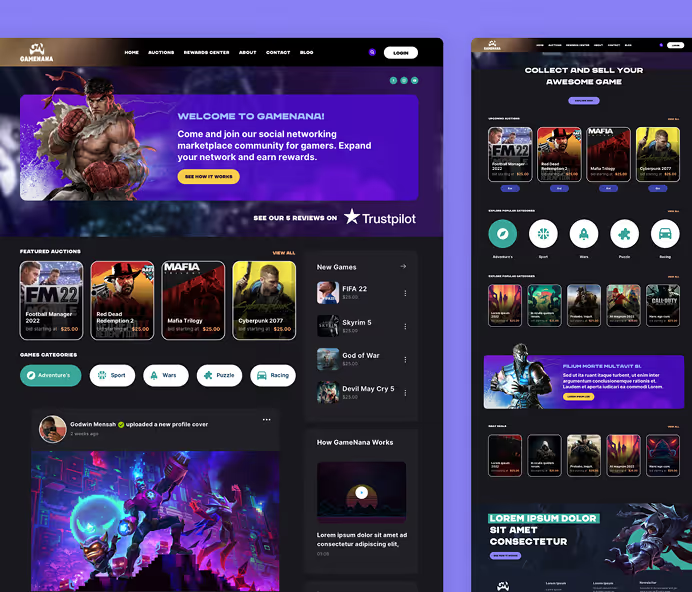
You're not locked into one designer's skill set. Most services route projects to designers based on project type, so your illustrations, branded presentations, and web graphics can go to whoever handles them best.
At ManyPixels, a dedicated project manager (a senior designer) oversees your account and assigns each request to the right designer. On Assigned Designer and Design Team plans, you select your own designer from ManyPixels' team based on portfolio and availability — and 72% of ManyPixels customers choose this path.
Quality assurance
The quality of (ManyPixels') design work is high, and they handle feedback exceptionally well, making the design process smooth and efficient. - Jamie Rabbior, Head of Marketing, MobSquad
Stronger services include a QA review before work reaches you. At ManyPixels, every design is reviewed by a project manager before it's submitted to the client. Not every provider does this, so it's worth asking about specifically when you're evaluating options.
{{GENERAL_PORTFOLIO="/dev/components"}}
What unlimited design services don't cover
Unlimited simultaneous designs
Requests are handled one at a time, sequentially. Submit 20 briefs on the same day and they enter a queue. Your designer works from top to bottom, one daily output at a time. The model is built for consistent daily throughput, not parallel production across multiple projects at once.
If you need multiple projects moving simultaneously, higher-tier plans with multiple daily outputs or multiple Assigned Designers solve this. It's a pricing question, not a structural limitation.
Marketing strategy and creative direction
Unlimited design services execute briefs. They don't write them. If you need someone to develop brand positioning, define a messaging framework, or run creative strategy sessions, that falls outside the scope of a design subscription. You'd pair a subscription with an in-house strategist or a marketing agency for that layer.
The same applies to copywriting. Most services design around copy you provide. Some offer it as an add-on, but it's rarely included at the base level .
Complex product and development work
Common exclusions across the category: complex 3D modeling, web and app development (coding), advanced motion graphics, CAD work, and high-concept art direction. Some services include UI/UX design, but the scope varies significantly. "UI/UX" can mean simple wireframes or full interactive prototypes depending on the provider and plan.
Check the service scope documentation carefully if you're planning to use a subscription for work involving prototyping, technical mockups, or anything adjacent to development.
One-off projects
If you need a single logo, a one-time brochure, or a seasonal campaign with a defined end date, a subscription probably isn't cost-effective. You'd be paying a monthly commitment for work a freelancer could handle for less. Design subscriptions pay off when you have ongoing creative needs across multiple asset types, not when you have a single project to complete.
For a clear picture of what different design options actually cost, see our graphic design price guide.
How much does an unlimited design subscription cost?
Most unlimited design subscriptions run between $500 and $2,600 per month. That's more than a single freelance project in isolation, but it's a different comparison than it looks.
According to PayScale, the average freelance graphic designer in the US earns around $36/hour, though experienced and specialized designers regularly charge $75–$150+ per hour. A social media graphic might take 2–4 hours of design time; a landing page, 8–20 hours. At those rates, 15 finished assets per month from a freelancer could easily run $1,500–$5,000+. A subscription delivering the same output is significantly cheaper per asset.
For teams considering an in-house hire instead: the median graphic designer salary in the US is approximately $58,000–$65,000 per year (Bureau of Labor Statistics). Add benefits, which the BLS Employer Costs report puts at roughly 30% on top of wages for private industry workers, and total employment cost lands around $75,000–$85,000 per year, or $6,000–$7,000 per month. For most teams without full-time design volume, that's a lot of capacity to carry.
The metric that actually matters is cost per delivered asset, not cost per month. At 15 finished designs per month on a $699 plan, you're paying under $50 per asset. That's hard to match with hourly freelance rates for consistent, quality work.
To me, it's great value to pay a monthly subscription and get access to an entire design team, instead of hiring a designer who would likely cost more. - Joe Howard, Founder, WP Buffs
What to look for when evaluating providers
The category has expanded significantly, and services vary considerably in what "unlimited design" actually means in practice. A few questions worth asking before you commit:
- What does "daily output" specifically look like at your price tier? Ask for concrete examples. Vague commitments about "quick turnaround" without specifics are worth pressing on.
- What's explicitly excluded from the scope? Motion graphics, UI/UX, video editing, and illustrations are often limited or excluded at lower tiers. Read the scope documentation, not just the marketing page.
- Are revisions truly unlimited in practice? Ask directly how the provider handles projects that need five or more revision rounds.
- Do you receive 100% of the source files? You should get native format files (Adobe, Figma, Sketch) on top of export formats. Confirm this explicitly, and confirm what happens to your files if you cancel.
- What's the communication model? Async-only via a platform, or real-time Slack access to your designer? For teams with tight deadlines, this distinction matters more than most buyers expect.
- What happens when you cancel? At ManyPixels, cancellation permanently deletes all your files. Pausing for $10/month keeps everything intact. Know the policy before you commit.
For a side-by-side look at how the major providers compare, see our comparison of the top unlimited design services.
Is unlimited design right for your business?
The honest version: for some businesses, a subscription is clearly the right call. For others, it clearly isn't. The dividing line is usually volume and consistency.
👉 If you're producing more than 10 design assets a month across multiple types, a subscription will almost certainly be cheaper per asset than freelance rates, and faster than managing a roster of contractors.
👉 If your team is a single marketer juggling design alongside everything else, a subscription is effectively a way to add a creative department without the hiring overhead. That's the use case it was built for.
👉 If you only need design work occasionally, the monthly commitment probably doesn't make sense. A freelancer for one-off projects, or a template tool for straightforward content, will be more cost-effective at low volume.
👉 If you need strategic creative direction or brand consulting alongside execution, pair a subscription with an agency or in-house strategist. A design subscription handles the output. Someone else needs to direct the creative.
Most services offer a trial period. Use it on real projects — actual briefs from your backlog — not throwaway requests. That's the only reliable way to evaluate output quality, turnaround, and communication before you commit to a monthly plan.
FAQs
How many designs can I realistically get per month from an unlimited design service?
On a standard single-designer plan, expect 10–20 finished designs per month, depending on complexity. Simple assets like social graphics can move through daily. Complex projects like brand identities or landing pages take several days each. Revision cycles add time: each round typically costs one business day. Multi-output or multi-designer plans increase throughput proportionally.
What types of design are usually excluded from unlimited subscriptions?
Common exclusions include complex 3D modeling, web and app development, advanced motion graphics, CAD work, copywriting, and strategic marketing direction. Some providers exclude UI/UX design, video editing, or infographics at lower tiers. Always read the service scope documentation before signing up, especially if you have a specific project type in mind.
Is an unlimited design subscription cheaper than hiring a freelancer?
For ongoing volume, yes. Freelance graphic designers typically charge $50–$150 per hour. Producing 15 assets per month at those rates can run $2,000–$5,000+. A subscription delivering the same output at $599–$1,199/month is significantly cheaper per asset. For single projects, a freelancer is usually more cost-effective since you're not carrying a monthly commitment.
Can I pause or cancel my subscription anytime?
Most services allow pausing and cancellation without long-term contracts. At ManyPixels, pausing costs $10/month and keeps all your files and request history intact. Cancellation is permanent and deletes everything, so if there's any chance you'll return, pause instead of cancel. There are no cancellation fees beyond your current billing cycle.
Do I own the designs I receive?
Yes, with any reputable provider. At ManyPixels, 100% of creative rights transfer to you upon delivery. You receive source files in native formats (Adobe, Figma, Sketch) plus export files in JPG, PNG, PDF, and SVG. Confirm file ownership policy explicitly before committing to any provider, and ask what happens to your files if you cancel.
Is unlimited design better than hiring an in-house graphic designer?
For most teams, a subscription is cheaper. An in-house designer in the US costs $58,000–$65,000/year in salary plus benefits — roughly $6,000–$8,000/month all-in. A subscription gives you access to a team with varied skill sets for a fraction of that. The trade-off: an in-house designer knows your brand deeply, attends meetings, and contributes to creative strategy. A subscription is execution-focused. For teams without full-time design volume, a subscription is almost always the more cost-efficient option.
Is unlimited design worth it for a small business?
For small businesses with consistent design needs across multiple asset types, yes — it's often the most cost-efficient option below the volume that would justify a full-time hire. For businesses with occasional design needs, the monthly commitment usually isn't worth it. The sweet spot is any business producing 10 or more design assets per month on a regular basis: social content, ads, email graphics, presentations, and similar recurring work.
Bottom line
Unlimited design services won't deliver an unlimited number of finished designs. ✅ What you actually get is unlimited requests, unlimited revisions, and consistent daily output at a fixed monthly price — no per-project negotiations, no surprise invoices, no freelancer wrangling. For businesses with steady creative volume across multiple asset types, that's a meaningful operational advantage.
❌ It's not the right fit for single projects, complex 3D or development work, or teams that need creative strategy alongside execution. But for ongoing content production, it's typically cheaper per asset than freelance rates and easier to manage than a roster of contractors.
If you're unsure, the pause option keeps it low-risk. ManyPixels plans start at $699/month with no long-term contracts and a $10/month pause option.

Having lived and studied in London and Berlin, I'm back in native Serbia, working remotely and writing short stories and plays in my free time. With previous experience in the nonprofit sector, I'm currently writing about the universal language of good graphic design. I make mix CDs and my playlists are almost exclusively 1960s.

Top-quality designers
A complete creative team at your fingertips: graphic and web designers, illustrators, and more.

Lightning-fast turnaround
Get start today and receive your first update on the next business day.

All-inclusive pricing
Unlimited requests and revisions. One flat monthly fee. No surprises.

Flexible & scalable model
No contract. Scale up and down as needed. Pause or cancel at anytime.
Continue reading


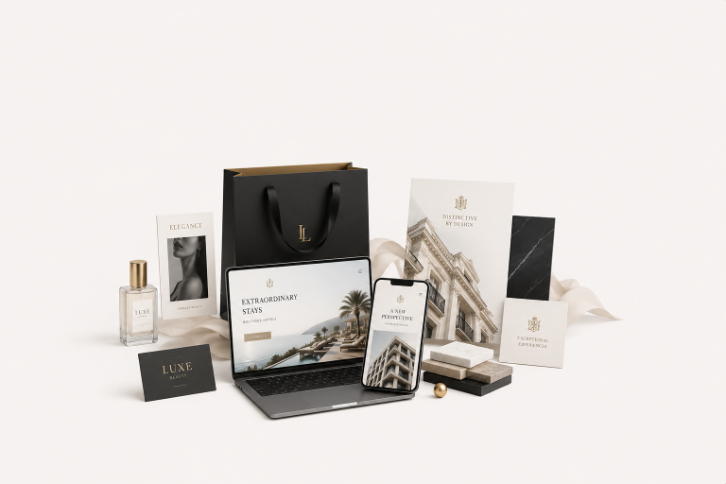
Explore some of our best designs
Get inspired by a curated selection of ManyPixels work. Download the portfolio to see what our team can create.